April 2026 offers a compelling mix of astronomical events for both beginners and seasoned stargazers. From bright lunar displays to potentially spectacular comets and a notable meteor shower, the month provides ample opportunities to observe the cosmos. This guide breaks down the key events and the best equipment for viewing them.
April’s Key Events at a Glance
The month begins with a full Pink Moon on April 1-2, providing an easy target for casual observers. Later, the Lyrid meteor shower peaks on April 21-22 under favorable dark skies. Two comets, C/2026 A1 (MAPS) and C/2025 R3 (PanSTARRS), will also be visible, though one poses safety concerns and the other’s brightness remains uncertain. Finally, Mars and Neptune will appear close together on April 13, though observing them will require larger telescopes and clear conditions.
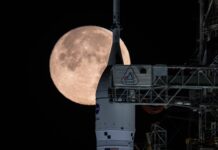
Observing the Full Pink Moon (April 1-2)
The full moon is always a striking sight, visible with the naked eye. However, binoculars or a small telescope reveal craters and lunar surface details. For photography, a long focal length lens and a stable mount (tripod or monopod) are essential. High-power eyepieces (6-10mm) on a telescope offer closer views, while lower-power options (20mm) provide wider vistas.
Equipment Recommendations:
- Camera: Long focal length lens with tripod. Smart telescopes can track and stack images for easier astrophotography.
- Binoculars: 12×50 or larger for detailed views; compact models work for handheld observing.
- Telescope: Small to medium aperture telescopes work well; eyepiece choice is crucial for lunar viewing.
Mercury at Greatest Western Elongation (April 3)
Mercury will be visible in the pre-dawn sky, but conditions will be challenging. While it can be seen with the naked eye, observing its phases requires a beginner telescope and an early wake-up call. Bright sunlight and low altitude make this a less accessible target.
Comet C/2026 A1 (MAPS) – A Sungrazer (April 4)
This comet makes its closest approach to the sun on April 4. If it survives, it could become brighter than the full moon. However, observing it safely requires caution: direct solar viewing is dangerous. The safest way to view this comet is via telescopes operated by space agencies like NASA’s SOHO.
Mars and Neptune Conjunction (April 13)
Mars and Neptune will appear close together in the pre-dawn sky. However, observing this conjunction requires a large-aperture telescope (6-8 inches or larger) due to Neptune’s distance. Low altitude and sunrise make ideal viewing conditions difficult.
New Moon and Galaxy Season (April 17)
The new moon on April 17 creates exceptionally dark skies, ideal for observing faint deep-sky objects like galaxies. This is also a prime time to photograph the cosmos.
Equipment Recommendations:
- Camera: Smart telescopes for automated tracking and stacking; long telephoto lenses with star trackers for advanced astrophotographers.
- Binoculars: 10x50s for wide-field observing; larger magnification for faint galaxies.
- Telescope: Small to large telescopes work well due to the dark skies.
Comet C/2025 R3 (PanSTARRS) – The Great Comet? (April 17-27)
Comet C/2025 R3 (PanSTARRS) is expected to be visible around the new moon, potentially reaching a magnitude bright enough to see with binoculars or even the naked eye. Its closest approach to the sun is April 17, and to Earth on April 27, offering multiple viewing opportunities.
Equipment Recommendations:
- Camera: Astrophotography setup with a telephoto lens; smart telescopes for light-polluted areas.
- Binoculars: Large objective lens diameter for maximum light gathering.
- Telescope: Small to medium aperture telescopes will suffice.
The Lyrid Meteor Shower (April 21-22)
The Lyrid meteor shower peaks on the night of April 21-22, with minimal moonlight interference. Meteors will radiate from the constellation Lyra, near the bright star Vega.
Equipment Recommendations:
- Camera: High ISO camera with a fast, wide-angle lens. OM System OM-1 Mark II would be a strong choice for its live composite mode.
- Binoculars: Not essential, but can enhance the experience for casual observers.
- Telescope: Not necessary for meteor observing, but can be used for wide-field views.
Conclusion
April 2026 offers a diverse range of celestial events, from bright comets to meteor showers and planetary conjunctions. Whether you are a beginner or experienced astronomer, proper equipment and planning will maximize your viewing experience. The dark skies around the new moon are particularly promising for deep-sky observations, making this month a must-observe for stargazers.