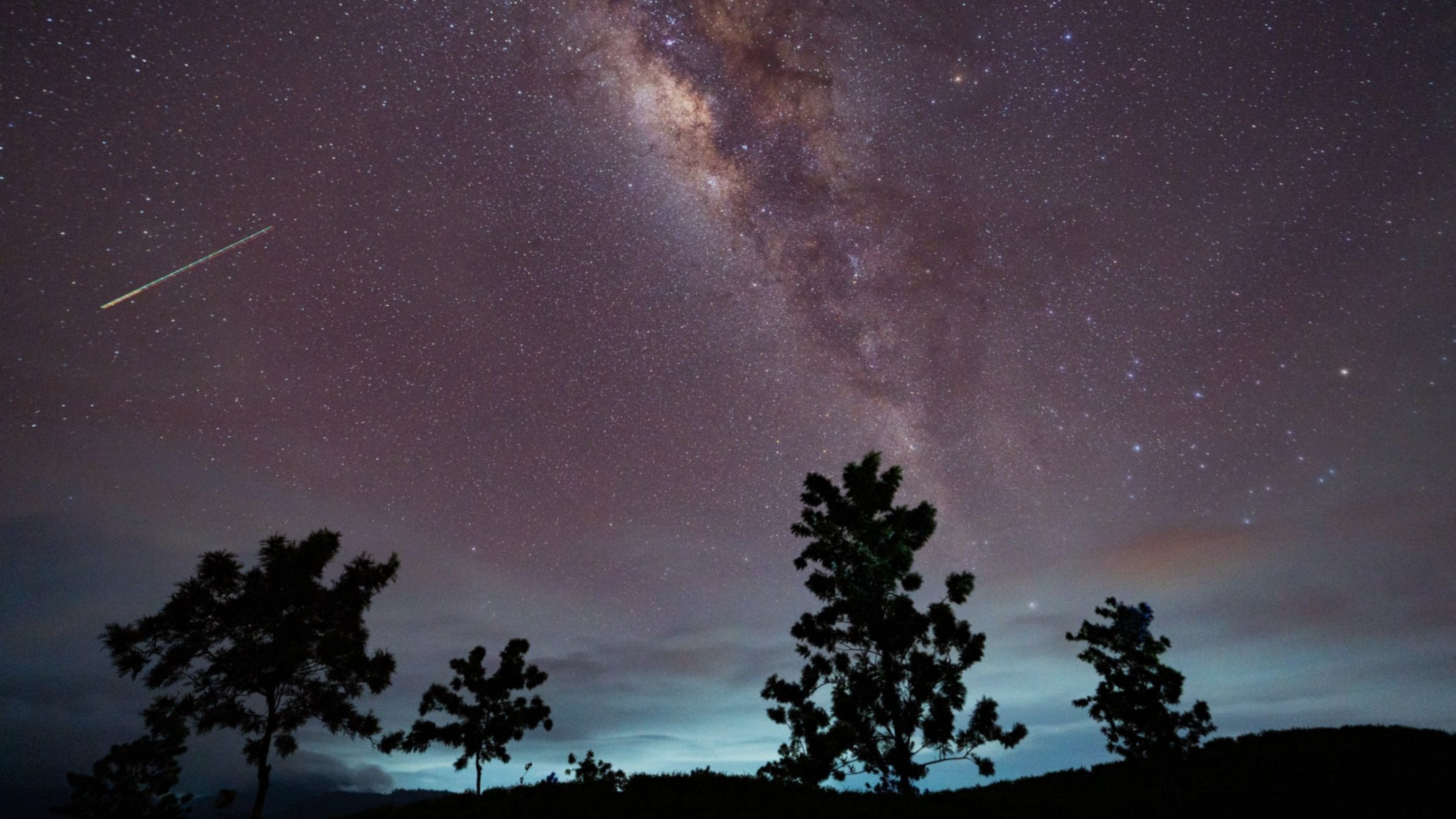
The annual Eta Aquarid meteor shower is approaching its peak, offering stargazers a chance to witness the cosmic debris of one of history’s most famous celestial visitors. As Earth intersects the dusty trail left by Halley’s Comet, the sky will light up with high-speed shooting stars.
However, 2026 presents a unique viewing challenge: while the meteor activity itself is strong, a bright moon will obscure many of the fainter streaks. Success depends on knowing exactly when and where to look, as well as understanding what to expect from this specific astronomical event.
The Cosmic Source: Halley’s Comet
The Eta Aquarids are not random; they are the direct result of Earth’s orbit crossing the path of Halley’s Comet. This periodic comet, which returns to the inner solar system every 76 years, sheds a continuous stream of dust and ice particles as it travels.
- Historical Context: Human records of Halley’s Comet date back over 2,000 years. Each pass adds to the dense stream of debris now circulating the sun.
- The Mechanism: As Earth plows through this debris field between April 19 and May 28, tiny particles slam into our atmosphere at speeds exceeding 40.7 miles per second (64 km/h).
- The Visual: The intense friction and pressure ignite these particles, creating the fiery streaks we call meteors.
Peak Activity and Expectations
The shower reaches its maximum intensity overnight on May 5–6, 2026. The visibility rate depends heavily on your location:
- Southern Hemisphere: Ideal conditions. Observers may see up to 50 meteors per hour.
- Northern Hemisphere: More modest rates. Expect between 10 and 30 meteors per hour.
Key Insight: The Eta Aquarids are known for their speed and occasional fireballs —larger, brighter meteors that can pierce through light pollution and moonlight, making them the best targets for viewing under less-than-perfect skies.
The Challenge: A Bright Moon
The primary obstacle for 2026 is the lunar cycle. On the night of the peak, the moon will be 84% lit (waning gibbous) and will rise around midnight.
- Impact on Visibility: The bright moonlight will wash out fainter meteors, likely reducing the visible hourly rate to below 10.
- The Silver Lining: While faint streaks may disappear, the brighter fireballs associated with this shower often remain visible. Patience and dark-adapted eyes are essential to spot these rarer, more impressive events.
How to Identify an Eta Aquarid
To confirm a meteor belongs to this shower, look for its point of origin, known as the radiant.
- Locate the Radiant: Meteors will appear to streak away from a point near the bright stars Zeta Aquarii and Sadachbia in the constellation Aquarius.
- Timing: This area rises in the eastern horizon during the early morning hours of May.
- Best Viewing Window: The optimal time is the predawn hours of May 6. At this time, the radiant is highest above the eastern horizon, maximizing the number of meteors that can be seen before they dip below the horizon.
Practical Viewing Tips
To maximize your chances of seeing the shower, follow these steps:
- Use Technology: Utilize a smartphone stargazing app to locate the radiant point, which should be to the left of the waning moon.
- Look Away from the Radiant: Counterintuitively, do not stare directly at the radiant. Instead, look roughly 40 degrees away from it, toward your local zenith (the point directly overhead). This allows you to see meteors travel further across the sky before disappearing.
- Dark Adaptation: Give your eyes 20–30 minutes to adjust to the darkness. Avoid looking at phone screens or bright lights.
- Photography: For those interested in capturing the event, long-exposure photography is required. Refer to specialized guides for camera settings and lens choices suitable for astrophotography in 2026.
Conclusion
The 2026 Eta Aquarid meteor shower offers a compelling, albeit challenging, viewing experience. While the bright moon will dampen the overall display, the shower’s reputation for fast-moving fireballs ensures that dedicated observers—particularly those in the Southern Hemisphere or willing to wait until the predawn hours—can still witness the dramatic legacy of Halley’s Comet.