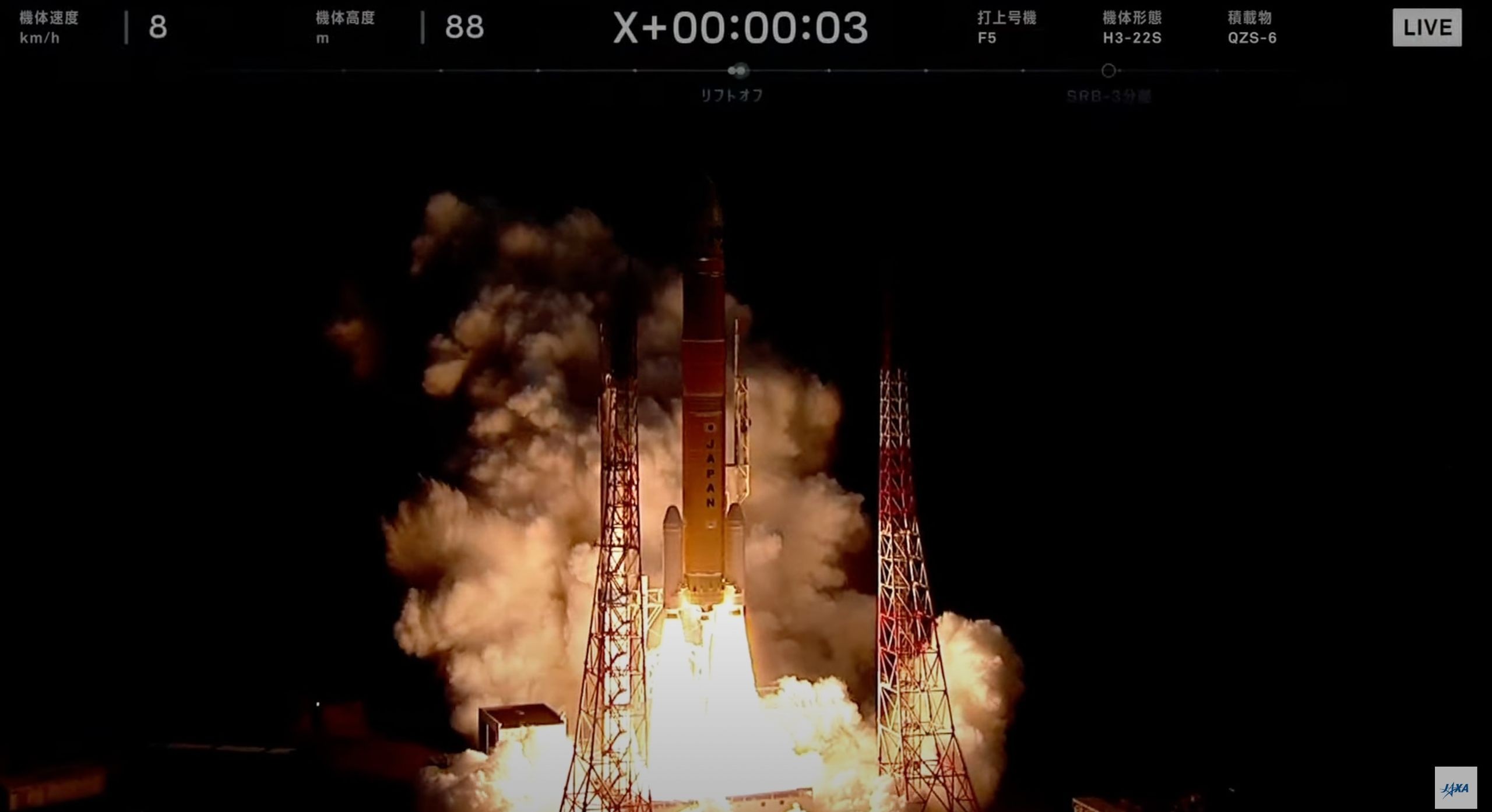
The scheduled December 16 launch of Japan’s Michibiki 5 navigation satellite was aborted less than a minute before liftoff. A new launch date has not yet been announced.
Background: Japan’s Quasi-Zenith Satellite System (QZSS)
This satellite is part of the QZSS, Japan’s independent regional navigation system. Unlike fully global systems like GPS, QZSS focuses on enhancing accuracy and reliability in the Asia-Oceania region. The system works with GPS, offering improved performance in areas where signals can be weak, such as densely populated cities or mountainous terrain.
The Mission Details
The 10,580-pound (4,800-kilogram) Michibiki 5 was set to launch atop an H3 rocket from the Tanegashima Space Center. This would have brought the total number of operational QZSS satellites to five. Japan’s long-term goal is an 11-satellite constellation for maximum coverage and redundancy.
Why This Matters
Japan’s investment in QZSS isn’t just about technology; it’s a matter of strategic independence. Relying solely on foreign navigation systems creates vulnerabilities. QZSS allows Japan to maintain critical infrastructure control, especially for sectors like transportation, agriculture, and disaster response. The expansion of the system into neighboring countries further solidifies Japan’s regional influence.
The H3 Rocket’s Recent History
This launch would have been the seventh for the H3 rocket, Japan’s replacement for the retired H-2A. The H3 had a rocky start, failing on its first mission in March 2023, resulting in a satellite loss. However, subsequent launches have been successful, demonstrating improvements to the program. This latest setback is a reminder that even established space programs face risks.
The cancellation of tonight’s launch underscores the inherent challenges of spaceflight. While the reasons for the scrub remain unconfirmed, the delay highlights the precision required in rocket launches and the critical importance of safety checks.
The next launch attempt will be crucial for maintaining momentum in Japan’s navigation program and reinforcing its regional positioning.