Triboelectric nanogenerators—TENGs—are clever little devices. They squeeze electricity out of friction. You rub two things together, maybe a balloon and a wool jumper, and charge transfers. Static cling meets power grid.
The concept isn’t new. Benjamin Franklin played with static machines centuries ago. But the modern TENG? That belongs to 2012. Zong Lin Wang and his team changed the game. They used a thin dielectric layer to induce charge via electrostatic induction. Positive electrode. Negative electrode. Current flows. Lights blink.
Why do people love them?
– They are cheap.
– Simple to build.
– Better than piezoelectrics or thermoelectrics at low frequencies.
– Higher power output for what they are.
Now, the world wants them. Not for powering cities, but for local tricks. Low-powered sensors. Wearables that power themselves. No battery swaps needed. Just walk around, run a little, let the friction do the work.
“It seemed to me… that the emerging TENGs had lot of fascinating tribology.”
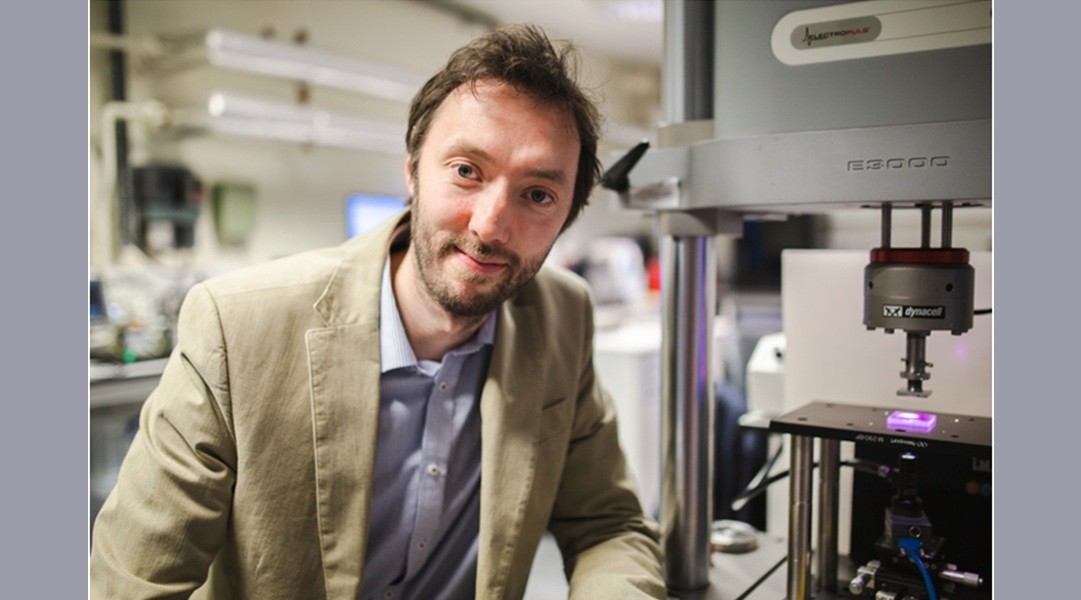
Prof. Daniel Mulvihill got involved in 2017, not just because the tech was cool. It was his background. He studies surfaces rubbing against surfaces. Tribology. He saw the mess.
By 2020, he secured funding from the EPSRC for a five-year project. Title? Something long about Next Generation Energy Autonomous Textile Fabics. Partners included Heriot-Watt and Atlantic Technological University. They wanted to put these generators in clothes. Think pacemakers. Heart monitors. Fitness trackers that never die. All powered by the simple act of breathing, walking, existing.
Here is the problem.
Everyone is trying to make TENGs better. Material science is exploding. Electronic innovations are flying by. But no one agrees on how to test them.
Testing is a mess.
If Lab A tests a surface treatment perfectly, they get great results. Lab B does the same treatment, but misaligns the surface by a millimeter? The electrical output drops to nothing. Suddenly, the material looks terrible. But it’s not terrible. The test was just wrong.
Variables everywhere.
– Surface roughness.
– Contact pressure.
– Temperature.
– Humidity.
– Alignment.
Subtle changes destroy data comparability. Without standard guidelines, a paper from Glasgow means nothing compared to one from Beijing. The science stalls. You cannot compare apples to oranges if you don’t even know which basket the oranges are in.
Mulvihill’s new paper—fully open access, of course—tries to fix this. It serves as a manual. Early testing was crude, basically throwing things at a wall and seeing if electricity stuck. This paper collects the best modern practices.
It explains the physics behind every factor. It details how environment kills or boosts output. It offers ways to mitigate errors. Basically, a playbook for not lying to yourself.
“The most exciting part… was bringing together our own experiences… with fascinating observations scattered throughout literature.”
It’s about collating the chaos into one reference. Accurate tests require accurate controls. Period.
The real ask? Standards. Real, hard, international standards.
Mulvihill wants the International Organization for Standardization—ISO—to step in. Establish a committee of experts. Write the rules. Because researchers need to know when a result is real, not just an artifact of bad experimental design.
It makes sense. Or should it. The technology is moving too fast for tribal knowledge to hold the line. Someone needs to draw the boundaries. Will anyone listen? We’ll see.