


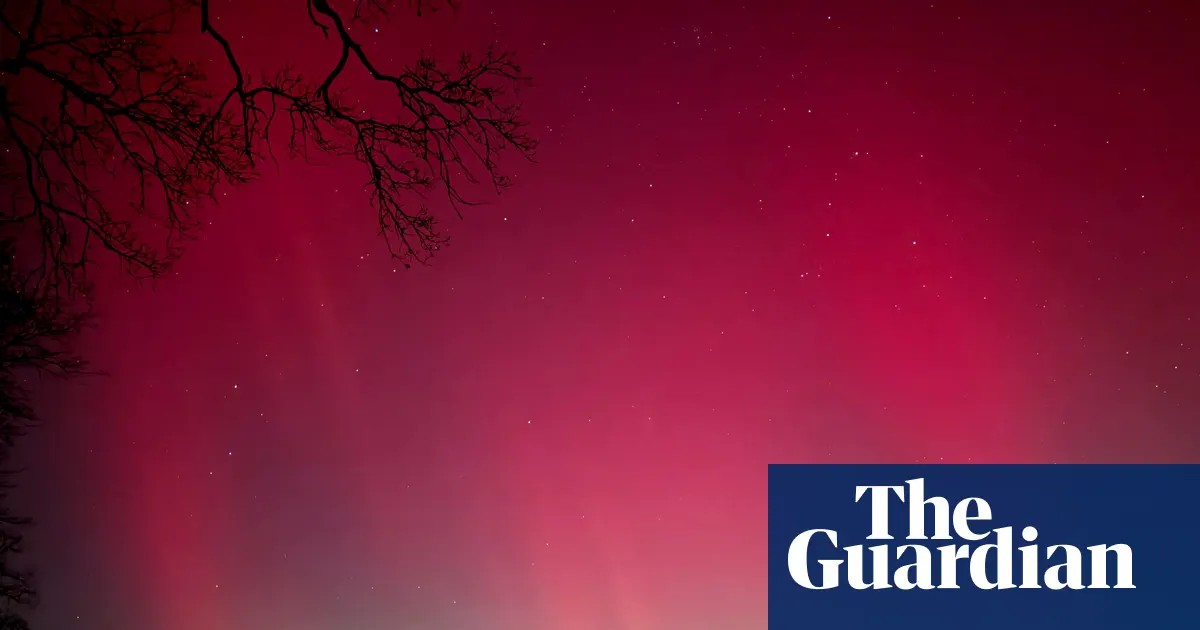
A major disturbance in Earth’s magnetic field is forecast to make the aurora borealis visible across a wider area than usual, potentially reaching as far south as the southern United States. The National Oceanic and Atmospheric Administration (NOAA) Space Weather Prediction Center reported that intense geomagnetic storms are underway, and the phenomenon could be seen as early as Monday night.
Why This Matters
This is not just a beautiful light show. Geomagnetic storms, while visually striking, can disrupt critical infrastructure. Interference with satellite operations, GPS systems, and power grids is possible. This event is particularly noteworthy because its intensity hasn’t been observed in over two decades. The last major event of this magnitude was in 2003, which caused widespread power outages in Sweden.
The Science Behind the Storms
The Earth’s magnetic field shields us from harmful solar radiation. When the sun emits particularly powerful flares and coronal mass ejections (CMEs), these disturbances interact with our planet’s magnetic field, creating geomagnetic storms. These storms compress the magnetosphere and funnel charged particles toward the poles, where they collide with atmospheric gases, creating the aurora.
Visibility Forecast
The aurora could be visible across Canada and the northern US states tonight. However, due to the strength of this storm, the lights may be seen as far south as Texas, Kansas, Colorado, and even further. The visibility will depend on local conditions and light pollution.
Potential Disruptions
Beyond the spectacle, these storms pose real-world risks:
- Satellite Anomalies: Satellites in orbit can experience malfunctions or even permanent damage.
- GPS Errors: Navigation systems relying on GPS may become unreliable.
- Power Grid Stress: High-frequency currents induced in power lines can overload transformers and trigger blackouts.
The NOAA predicts the storm will subside sometime on Tuesday, but impacts could linger for several days.
Recent Precedents
Similar solar storms in November 2023 brought the aurora to parts of Europe, including the United Kingdom and Hungary, and as far south as Kansas, Colorado, and Texas. This suggests that the current event could produce even more widespread visibility.
This geomagnetic storm underscores the importance of space weather monitoring and the need for infrastructure resilience. The event serves as a reminder that the sun’s activity can directly impact technological systems on Earth.


