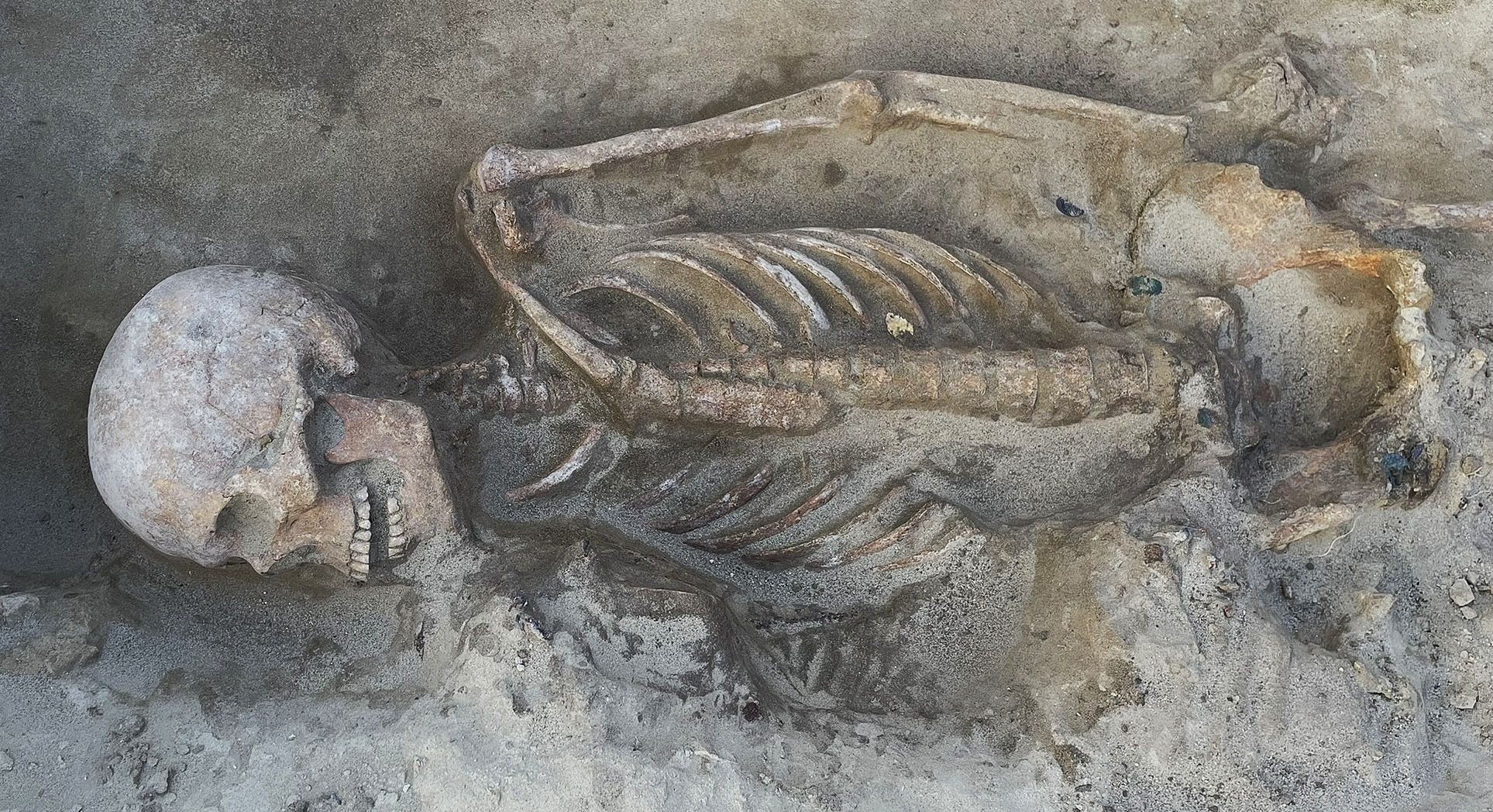
Archaeologists in Hungary have unearthed the remarkably preserved remains of three elite warriors dating back over 1,100 years. The discovery, made near the village of Akasztó, reveals a kinship between the buried men, suggesting a warrior dynasty or closely allied military leadership.
The Discovery & The Warriors
The burials, excavated by a team from the Katona József Museum, date to the 920s or 930s CE – a period when the Hungarian kingdom was expanding and conducting raids into neighboring territories. The warriors were buried with weapons, including sabers, bows, and quivers of arrows, alongside dozens of coins primarily from northern Italy. The presence of these coins suggests the warriors likely participated in military campaigns during the reign of King Berengar of Italy (888-924), a descendant of Charlemagne.
The skeletal remains show varying ages at death: one warrior was between 15 and 16 years old, another between 17 and 18, and the third between 30 and 35. The younger warriors were buried with ornate equipment like gilded silver-decorated belts and antler-plated bows, while the elder had a silver-plated sabretache and gold-adorned horse harness. The lavish burial goods underscore their high status within Hungarian society.
Genetic Linkages
DNA analysis confirmed a familial connection between the three men. The eldest was likely the father or brother of the youngest, and all shared paternal lineage. This suggests they were not just warriors but part of an elite, possibly hereditary military class. The isotopic analysis of their bones reveals diets high in animal protein, consistent with the lifestyle of seasoned fighters.
Historical Context & Significance
The findings offer insight into the military structure and social hierarchy of the early Hungarian kingdom. The period saw frequent conflicts with neighboring states, particularly in Italy, which explains the presence of Italian coins. The elaborate burials suggest that these warriors were highly valued within their community, possibly serving as regional commanders or key figures in raiding parties.
“The discovery provides a rare glimpse into the lives of elite warriors in a formative period of Hungarian history,” stated Wilhelm Gábor, head of the Katona József Museum’s archaeology department.
The cause of death for the warriors remains unknown, but further research may reveal more details about their final moments. For now, the Akasztó burials stand as a testament to the military prowess and social structure of the early Hungarian kingdom.