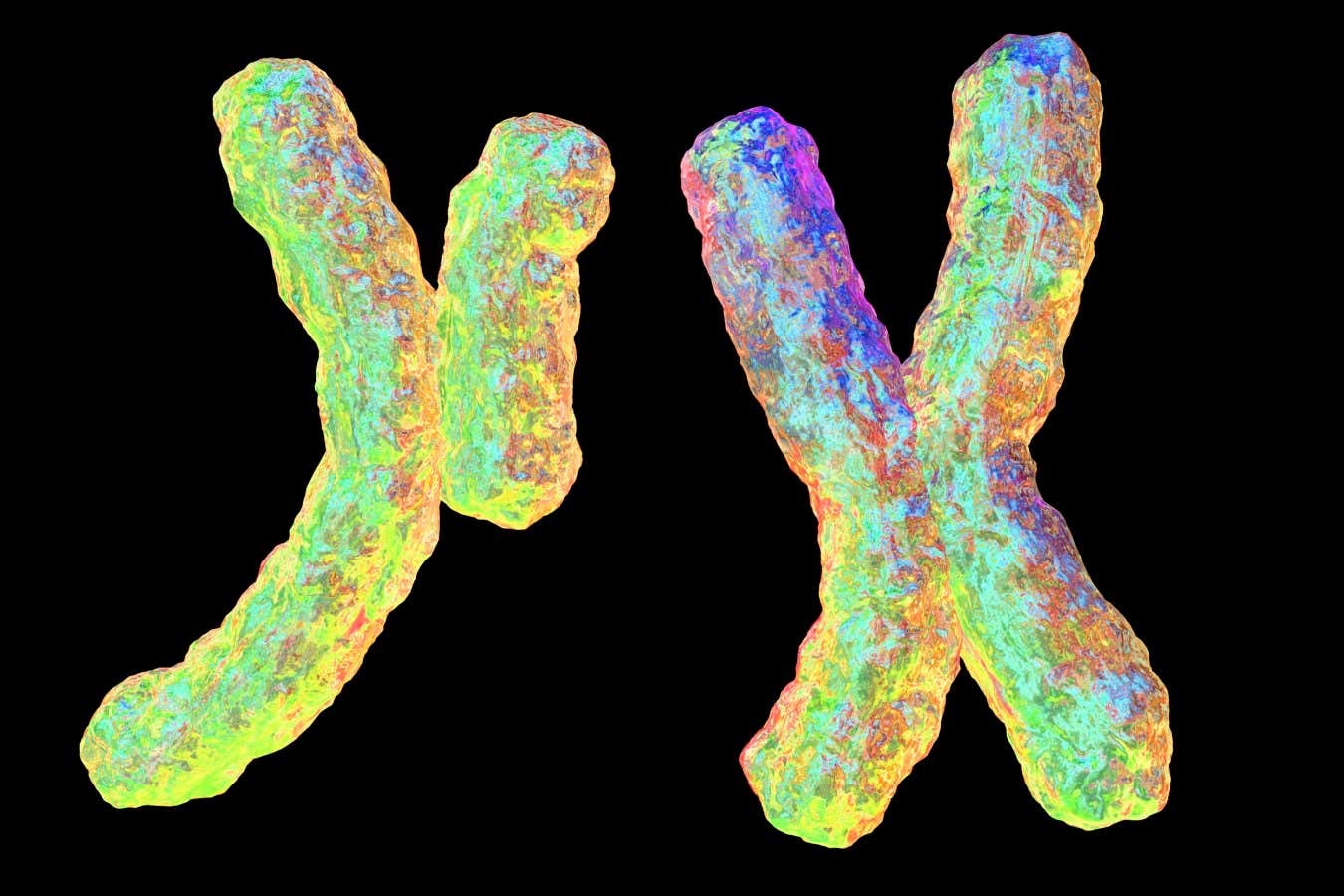
A long-term genetic analysis of a Utah family dating back centuries suggests a rare biological mechanism: a “selfish” Y chromosome that dramatically increases the probability of male offspring. Researchers at the University of Utah identified this pattern in a multi-generational dataset, where 33 men inherited the same Y chromosome, resulting in 60 male and only 29 female children across seven generations.
The Science of Skewed Sex Ratios
Normally, sperm carry either an X or Y chromosome, theoretically leading to a 50/50 chance of a male or female child. However, some chromosomes contain genetic variants that manipulate this ratio. These so-called “selfish” genes can sabotage sperm competition—by disrupting scent trails, eliminating competitors, or other unknown mechanisms. Though observed in many animals, proving their existence in humans has been difficult due to the statistical noise of chance occurrences.
Why This Matters
The Utah study is significant because it uses an extensive dataset (76,000 individuals) to show that the observed male bias is statistically unlikely to be random. This raises questions about the prevalence of such selfish chromosomes in human populations and their potential impact on fertility rates.
The researchers emphasize that the findings are preliminary due to anonymized genetic data and ethical hurdles in obtaining direct sperm samples for analysis. While the possibility of misattributed paternity has been considered, the team remains confident in the reliability of their results.
Implications for Fertility
Mechanisms that selectively eliminate sperm could explain some cases of male infertility, which remains a significant health concern. Furthermore, this research aligns with animal studies showing that selfish chromosomes can also reduce reproductive success in individuals carrying them.
The team plans to analyze sperm samples to confirm skewed X-Y ratios and further investigate the underlying genetic mechanisms. The broader implications extend to gene drive technology, where artificially engineered “selfish” genes are being explored for controlling pests or disease vectors.
In conclusion, the Utah family study provides compelling evidence for the existence of selfish Y chromosomes in humans, offering a glimpse into the complex interplay between genetics, reproduction, and the subtle forces that shape sex ratios in populations.