Bolling Hall Museum in Bradford has secured a £3,500 grant from the Royal Society to launch a project exploring the life and work of Abraham Sharp, a 17th-century astronomer born in the city. The project, titled “Describing the Heavens: Astronomy from Islamic scientists to Bradford’s Abraham Sharp,” will highlight the surprising connection between Sharp’s scientific development and the contributions of medieval Islamic scholars.
Why This Matters: Beyond Local History
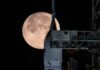
The grant, part of the Royal Society’s “Places of Science” scheme, aims to connect local communities with often-overlooked scientific heritage. Sharp, born in 1653, excelled in both astronomy and mathematics, calculating pi to an impressive 72 decimal places. He later became a prominent figure at the Greenwich Royal Observatory—and even has a lunar crater named after him.
But what is lesser known is that Sharp’s work built upon centuries of astronomical innovation from the Islamic world. For centuries, scholars in Baghdad, Damascus, and Cordoba preserved and expanded upon Greek and Indian astronomical knowledge, developing advanced instruments and theories. By spotlighting this historical context, the project emphasizes that modern science isn’t solely a Western achievement.
Project Details: Community Focus
The museum will host a series of family events, workshops, and an exhibition to engage local South Asian communities, recognizing their connection to the historical scientific legacy. According to James Steward, Head of Service for Bradford District Museums and Galleries, “This project is about connecting communities with stories that are relevant to them… celebrating diversity, curiosity, and shared ownership of our heritage.”
The project’s collaborative approach—working with local communities to share history—is a key component. This isn’t simply about presenting facts; it’s about co-creating a narrative that reflects Bradford’s diverse heritage.
Bolling Hall: A Historic Setting
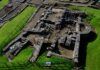
Bolling Hall itself has a rich past, dating back to the medieval period and serving as a Royalist stronghold during the English Civil War. Now, it will become a focal point for examining how scientific thought evolved through cross-cultural exchange.
The grant underscores a broader trend of museums re-evaluating their collections through more inclusive lenses. Other museums across the UK are also receiving funding under this scheme, with projects ranging from river ecology to local art history.
This project serves as a reminder that scientific progress is rarely linear and often relies on contributions from diverse cultures and eras. Highlighting these connections enriches our understanding of history and inspires future generations of scientists.