As the Artemis II mission approaches its final, most perilous stage—a high-speed reentry into Earth’s atmosphere—a debate is intensifying over the safety of the Orion spacecraft’s heat shield. While NASA maintains that the crew is safe, a vocal group of experts warns that the mission is operating on the “edge of a cliff.”
The Core Problem: Unexpected Char Loss
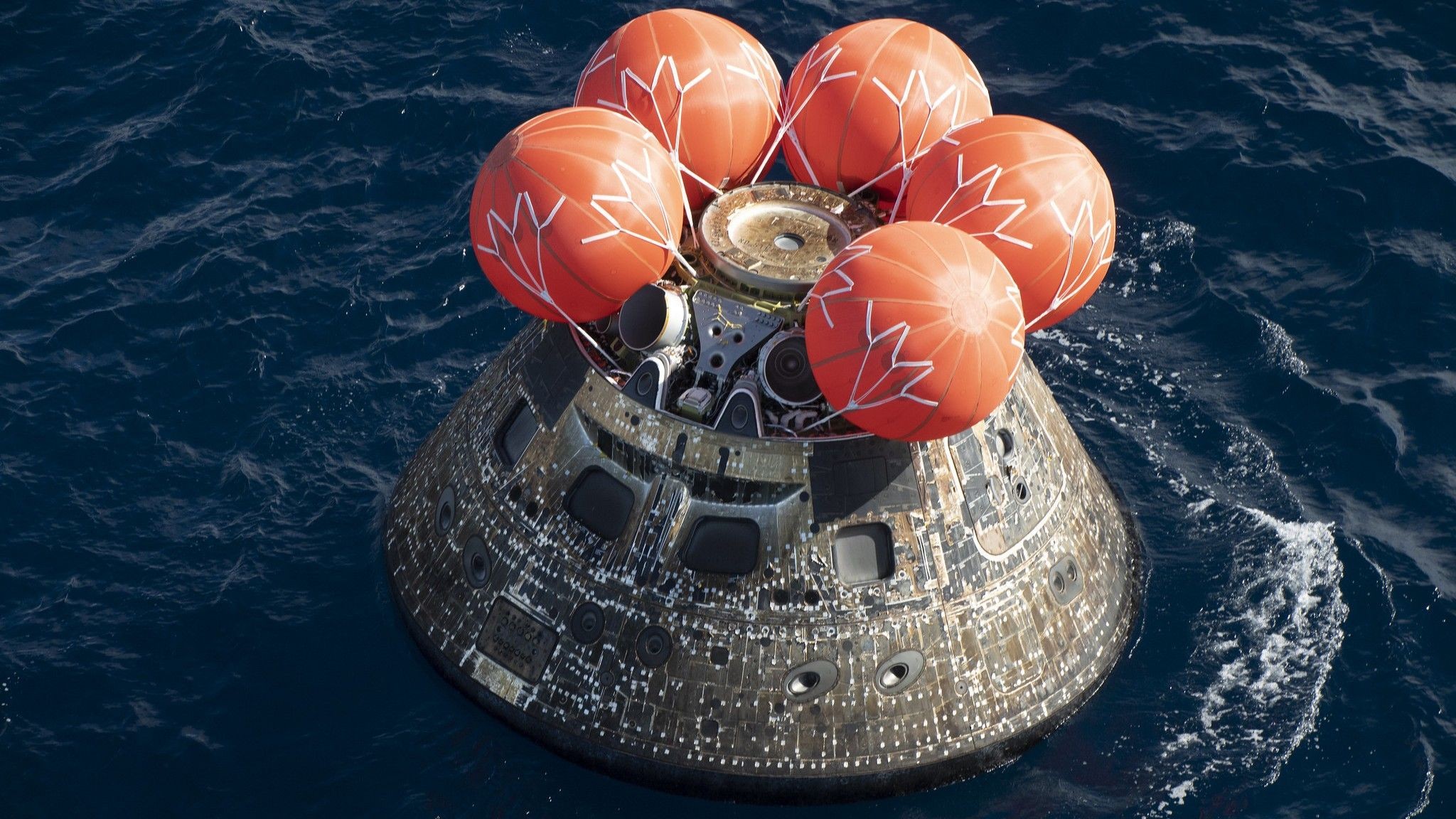
The central concern stems from the predecessor mission, Artemis I. During its uncrewed reentry in 2022, the Orion capsule’s heat shield—composed of a specialized material called Avcoat —did not behave as predicted. Instead of eroding smoothly, the shield suffered “char loss,” where large chunks of material broke off.
NASA’s investigation into this phenomenon revealed a technical paradox:
– The Cause: During the “skip reentry” used in Artemis I, the spacecraft bounced off the atmosphere, causing temperatures to fluctuate.
– The Mechanism: These temperature shifts caused gases to build up inside the Avcoat material. Because the material couldn’t “breathe” or vent these gases effectively, internal pressure spiked, causing the charred surface to crack and flake away.
– The Complication: To prevent this, engineers had previously made the Avcoat less permeable. Ironically, this means the Artemis II shield is even less capable of venting gas than the one that experienced issues during Artemis I.
NASA’s Solution: Changing the Flight Path
Rather than replacing the heat shield, NASA has opted to change how the spacecraft enters the atmosphere. This is a strategic pivot from “skip reentry” to a more direct approach.
Instead of “skipping” like a stone on water, Artemis II will perform a “loft” movement. This involves:
1. A steeper entry angle: Reducing the time spent in the most volatile parts of the atmosphere.
2. Reduced exposure: Minimizing the specific thermal cycles that caused gas buildup in the previous mission.
“We altered the mission profile… to account for what I would describe as the ‘shortcomings’ of the current heat shield,” stated NASA Administrator Jared Isaacman.
A Divided Expert Community
The decision to proceed with a modified flight path rather than a hardware replacement has split the aerospace community into two camps.
The Case for Confidence
NASA and several veteran observers argue that the risk is managed. They point to two key factors:
– Structural Redundancy: Engineers concluded that even if the Avcoat layer were to fail significantly, the Orion’s thick composite base and titanium framework could provide enough protection to keep the crew alive.
– Historical Data: During Artemis I, despite the material loss, internal temperatures remained normal. Had humans been aboard, they would have been safe.
The Case for Caution
Conversely, some former NASA employees and engineers, such as Charles Camarda, remain deeply skeptical. The argument is that “spalling”—the breaking off of large chunks—indicates a system nearing incipient failure. For these critics, relying on a flight path tweak to compensate for known hardware shortcomings is a dangerous move with no “Plan B.”
Summary of the Tension
The Artemis II mission represents a classic engineering trade-off: managing a known hardware limitation through procedural changes. While the mission has been a technical triumph thus far, the final reentry will serve as the ultimate test of whether NASA’s mathematical models can truly outrun the physical realities of extreme thermal stress.
Conclusion: NASA is betting the lives of four astronauts on a revised reentry trajectory designed to bypass the mechanical flaws of the Orion heat shield. Whether this procedural fix is a brilliant engineering solution or a risky workaround remains to be seen during the final splashdown.