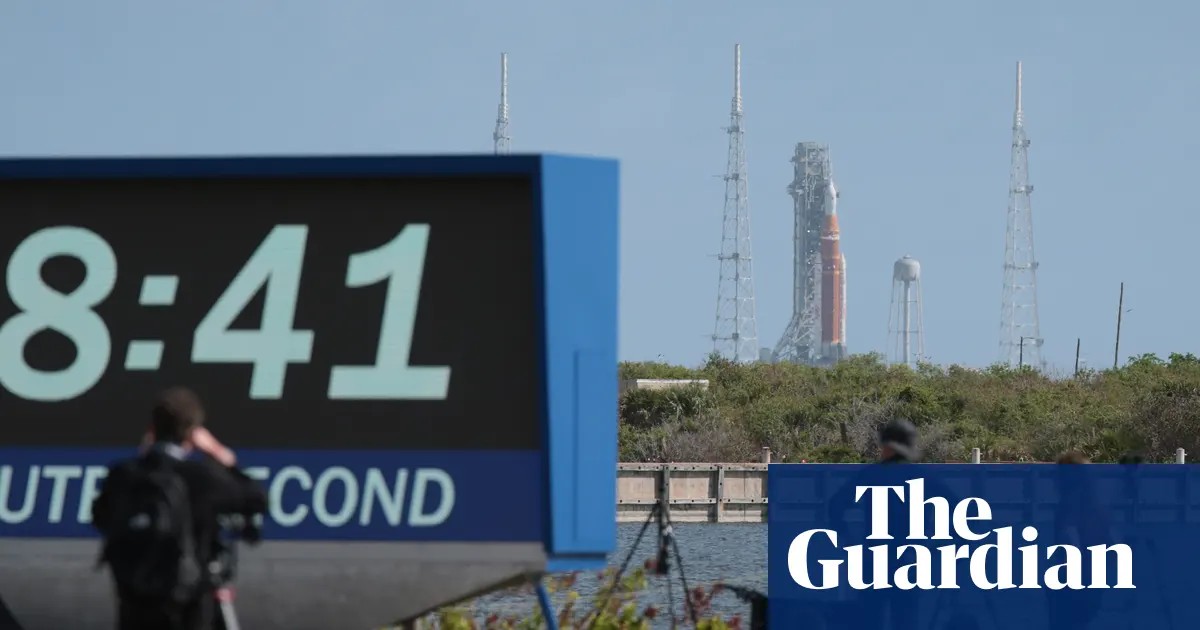
For the first time in over half a century, a crewed spacecraft is poised to venture beyond Earth’s orbit and toward the Moon. The Artemis II mission, scheduled for launch from Florida’s Space Coast on Wednesday, represents a historic leap forward in space exploration, marking the first human journey to cislunar space – the region between Earth and its lunar companion – since Apollo 17 in 1972.
A Milestone for Diversity and Inclusion
The four-person crew includes three Americans and one Canadian astronaut, with two making history: Christina Koch will become the first woman, and Victor Glover the first person of color, to travel to this critical space region. The Canadian Space Agency’s Jeremy Hansen will also be the first non-American to reach cislunar space. The mission’s symbolism is undeniable, though astronauts have emphasized that these “firsts” should eventually become commonplace.
“If we’re not going for all and by all, we’re not truly answering all of humanity’s call to explore,” said Koch in a pre-flight briefing.
The flight, while not landing on the Moon, will push the boundaries of human travel, with the Orion capsule expected to reach over 253,000 miles from Earth – exceeding the record set by Apollo 13 in 1970. This extended range is crucial for testing systems and gathering data for future, more ambitious missions.
Political Shifts and Space Agency Priorities
While the Artemis program initially showcased crew diversity, recent shifts in administration have led to changes in NASA’s public messaging, downplaying DEI initiatives. Despite this, the crew themselves have acknowledged the importance of representation in inspiring future generations of explorers.
Laying the Groundwork for a Lunar Base
The Artemis II mission serves as a critical foundation for NASA’s long-term goals, including a planned $20 billion lunar base by the end of the decade. The crew will photograph key areas of the Moon’s south pole, where future landings and construction are planned, and test essential hardware for sustained lunar operations. The 10-day flight will also study the effects of prolonged exposure to radiation and microgravity on the human body.
Challenges and Preparations
The journey is not without its challenges. The crew will live in a cramped capsule for nearly two weeks, and NASA has addressed technical hurdles like heat-shield issues and helium leaks that previously delayed the launch. Current weather forecasts suggest an 80% chance of favorable conditions for Wednesday’s attempt, with backup launch windows available for the following five nights.
The Artemis II mission is a bold undertaking, years in the making and billions of dollars in the making. Its success will pave the way for humanity’s return to the lunar surface in 2028 with Artemis IV, signaling a renewed commitment to long-term lunar presence.
This mission is more than just a flight; it’s a statement that the United States intends to lead the way in the next era of space exploration.