Why a penny falling off the #EmpireStateBuilding won’t kill you: The truth behind MythBusters
Dropping a penny from the roof of the Empire State Building will not crack a pedestrian’s skull. It can sting. Bruises may remain. But it doesn’t kill anyone. The aerodynamics of falling coins do not support this deadly legend.
And then there’s daddy long-legged spider. Or maybe a crane flies, depending on who you ask. They are considered the most poisonous spiders on earth. However, their teeth are too small to pierce human skin. Therefore, the poison remains in the mouth. It is harmless.
And swallowing Pop Rocks candy with soda? Your stomach won’t explode. The gas produced is the same as other carbonated drinks. You might get bloated. You might burp. But it doesn’t explode.
The story continued its cycle. Lightning striking a tongue piercing. Cockroaches can survive a nuclear war. We hear them at parties. From a friend. From a relative I heard from someone I “might” know. We repeat them because they are fun. Because they are scary. Because they stick.
However, not all urban legends are false. Some are true. Some people are simply misunderstood. Someone needs to test them. See if the science works. Enter MythBusters.
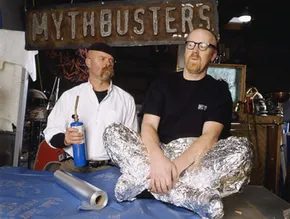
Every Wednesday night Discovery Channel hosts Adam Savage and Jamie Hyneman to test your intelligence. They use their bodies. their equipment. Their budgets to find the truth. They are joined by a “build team.”. Kari Byron. Tory Belleci. Grant Imahara. Together, they form a unique scientific and unit of science and spectacle.
Since 2002, the series has aired more than 100 episodes. They tested over 300 myths. The results? Some have been confirmed. Some are busted. Some are plausible. The penny myth? Busted. The spider myth? Busted. The Pop Rocks myth? Busted.
The show is famous for destruction. They blew up the water heater. They drowned the car. They have shot tires. But the explosion is just a bonus. The actual work is methodical. They use the scientific method. Controlled experiments. variable test. Yes, it can get messy. But this is science.
The original goal was simple: have fun. Educate the audience. Let science meet entertainment.
The strategy worked. MythBusters has become one of the highest rated shows on the Discovery Channel. More than 10 million viewers tuned in weekly. Worldwide. Each episode contains two to four myths. Usually related. Sometimes there is a theme. There is a “big movie” image. Pirate episodes. Jaws experiments. Audience Choice shows how your audience voted on what to test next.
Due to their fame, they even appeared in an episode of CSI: Crime Scene Investigation. A nod from the forensics drama to the myth-busting duo.
This article explains how the show works. team. The equipment. Manufacturing process. See how MythBusters turns urban legends into educational entertainment without sacrificing the thrill of testing.
Special thanks to MythBusters producer Dan Tapster for his help with this article.
Cast: Jamie and Adam
Jamie Hyneman and Adam Savage are the faces of the operation. They bring different skills. The temperament is different. Jamie is an engineer. Exact. I felt calm. Let’s organize. He built the hardware. He ensures safety. He checks the information.
Adam was a builder. Full of energy. Be creative. Please invest aggressively. He was responsible for the actual construction. weld. Painting. Sometimes I hurt.
Together they balance each other out. Jamie stuck to the basics of the experiment. Adam pushes boundaries. they claim. they argue. they cooperate. It works because they respect the process.
Build a team to support them. Kari Byron. Tory Belleci. Grant Imahara. Everyone brings expertise. electronic products. Mechanics. research. They are more than just helpers. They are testers. Collaborative thinkers.
The presentation is based on this structure. The home team takes the lead. Team support. The results will be shared. transparent
The myth busters behind the myths
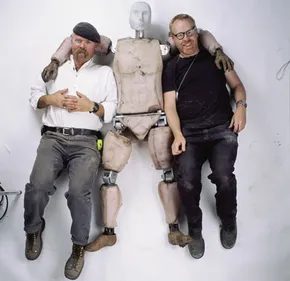
You can tag Jamie Hyneman and Adam Savage all you want. Manufacturer of the model. propeller builder. Mechanic. TV personality. But if you remove the title, you get exactly what you see on the screen. He has a childlike curiosity and is an inquisitive and creative thinker.
It is no coincidence that Adam Savage played this role. He was raised by his father, a film director and painter, and his mother, a psychotherapist. As a child, he appeared in TV commercials and music videos. By his late teens, he had moved on. However, the early gigs were not in vain. He became an animator. toy designer. Carpenter. Graphic designer. He worked as a projector, landscape painter, stage designer and welder. This had nothing to do with TV testing at the time. Little did he know that each of these jobs would later fuel his career as a “myth buster.”
To keep it real, Adam has a trick. He pretends the camera is his wife and just tells her about his day. it works. That’s why he brings his quirky, humorous and sometimes mischievous personality to your living room every week. With his signature black horn-rimmed glasses, red hair and goatee, he looks like the kind of guy you’d hang out with in a science lab. You don’t realize how cool he is until you get to know him.
Hyneman has also held various positions. And that’s not including the iconic beret. He is a diving master. Wilderness survival expert. animal wrangler. cook. Linguist. He holds a degree in Russian language. He even ran a diving and sailing adventure company in the Caribbean. You could say he is a jack of all trades.
Maybe a master, too.
After leaving the Caribbean, Jamie moved into the visual effects industry. He managed crews building models and special effects for television commercials and films. Once he established his reputation there, he did what any good craftsman would do. He opened his own shop. M5 Industries.

Jamie plays the role of a straight man. Adam is the court jester. This contrast is intentional. Jamie looks special. A shaved head. black beret. white oxford shirt. Wire-rimmed glasses. And a mustache. It’s impossible to describe Jamie without mentioning his walrus-style mustache.
His personality matches the aesthetic. Deadpan. The voice is deep. However, there is subtle humor behind it. It goes against his stoic appearance.
They met in 1993. Adam was working in the theater at the time. He creates unique props for stage productions in the San Francisco Bay Area. Jamie had heard of him. He decided that Adam was someone he needed to get to know. They hooked up. Adam showed off some of his “toys”. They hit it off right away. Jamie hired Adam as a model maker. They later shot more than 100 commercials together.
In 2002, producer Peter Rees came up with the idea for “MythBusters”. He spent six months looking for a host. Rees had interviewed Jamie five years earlier. It’s about the robot he and Adam created for the original “Robot Wars” TV show. Jamie seemed like a good choice. So Rees called him. He asked Jamie if he would be interested in hosting a new show that debunks myths through scientific experiments.
Jamie knew instinctively that he wasn’t right for the role. Not as a solo host. He suggested that he and Adam work as a team. The duo filmed and edited a 14-minute audition tape for Reese. Rees uttered, “You guys are just the geeks we’re looking for.” The rest is myth busting history.
“MythBusters” to Go
Bring a fire extinguisher and safety glasses. The next page introduces Kari, Tory and Grant. You can download the official MythBusters app for iPhone and iPad. Chat with other fans. Play games. Watch the video. Check out the latest news from Jamie and Adam.

Jamie and Adam claim credit, but the M5 team prevents the experiment from failing. Kari Byron didn’t start out as a TV host. A native of the Bay Area, she graduated from San Francisco State University and traveled the world as a sculptor, painter and model maker. That last bit led her to the M5.
His first appearance on The MythBusters** was a strange one. The myth refers to a sudden loss of pressure in the plane’s cabin, causing passengers to be sucked into the toilet. Jamie and Adam needed a realistic human back model for testing. Kari stepped up. Although he still made occasional appearances, it wasn’t until the second season that he appeared regularly in front of the camera.
Tory Belleci is also a graduate of San Francisco State University. After school, he worked as a stage manager for Jamie. He then joined George Lucas’ special effects giant Industrial Light & Magic (ILM). He built models for The Phantom Menace and Attack of the Clones. After eight years at ILM, he met up with Jamie at M5. He started behind the scenes. In the second season, he appeared in front of the camera with Kari.
Grant Imahara is the last of the trio. He is from Los Angeles and studied at the University of Southern California. He is an expert in electronics and radio control. His resume backs it up. In the movie “The Phantom Menace” he controlled the R2-D2 model. He was a model maker and animatronics engineer at Industrial Light & Magic. He worked on ‘The Lost World: Jurassic Park’, ‘Terminator 3’ and the last two ‘Matrix’ films. In 2005, Jamie invited him to join the The MythBusters** team.
The build team tested some crazy things. They checked if a snowplow could blow a car off the road. Busted. They put the school bus behind a passenger jet engine. Confirmed. The job is cool. It has a cost. Ask about water torture test. Tory and Kari say that cold water on the forehead makes you talk eventually. confirmed.
M5 shop and Myth Revisits
We will look at the M5 store later. Let’s look at the myths first. Sometimes one test is not enough. The show returns to experiments when the results are unclear. The audience or the team will come up with better ways to test things. “The MythBusters**” has five episodes dedicated to this. They reopened 24 myths. Many of them have been retested with variations. It is difficult to compare the results side by side. Most were re-busted. Only a few were deemed plausible. None went from busted to confirmed.
The MythBusters** was criticized by armchair scientists. They admit they are not scientists. They try to have fun and do legitimate experiments. The scientific community accepted them. They put the spotlight on science.

Jamie Hyneman didn’t wait until the Discovery Channel offered him a career. He started M5 Industries from scratch. This is a one-man business that has managed to survive in the turmoil of TV hits. Despite the frenetic pace of the filming schedule, the store is still the beating heart of MythBusters. This is where myths are born, established and tested. If the explosion takes place within the walls of the warehouse, M5 is the likely location. If it gets too big or dangerous, the team leaves the place. But what about parking? This also attracted people’s attention.
Neighbor dispute
It’s not always that straightforward. At one point, the operation had three buildings: M5, M6 and M7. Then there were complaints about the noise. The quiet neighbors of the industrial park did not survive the explosion. M6 can be folded. The team was combined with the more private M5 and M7.
The division of roles is now clear. The M5 is the main hub. Adam Savage and Jamie Hyneman do the heavy lifting here. This is also where each episode begins and ends. When did things go haywire? They moved to the M7.
A working museum
Walk across the M5 and enter the museum of over 300 myths. The place was full of people. Props, half-baked experiments and pieces of past tests are packed into every corner. Don’t look for the original rocket car in the pilot episode. Jamie was convinced the show was never acceptable and sold it years ago. he was wrong.
However, this is not a museum. This is a seminar. The instruments are genuine. Work is active. You’ll find a metal lathe buzzing in the corner. A welding station where sparks fly like lightning. All kinds of nuts, bolts, screws and materials are stacked on the shelves. I had an old card catalog full of small motors. Computer-controlled milling machine for precise robotic cutting.
Safety is non-negotiable. The preparation of the rigging is complete. A crash test dummy stands guard. Heavy machines are idle and waiting for a signal. Everything here has a purpose. Let’s just see if something can be done. Or if you can’t. The team walks away unscathed, because that’s the most important thing. Test your limits. And survive as a result.

Fractured science
Forget the desserts floating in the fridge. MythBusters’ flying stuff is a more industrial proposition. If workers need to simulate human tissue, pig carcasses are avoided if possible. They mix powders for specific batches. It starts dry. Next is the antifoam. Pack the mixture in ice to set. The preservative prevents the lens from rotting before it is cut open. Finally, mold it.
The result is a wobbly, fake bust. Ready to make an impact.
Appearance is not important here. It’s the density. This ballistic gel approaches the density of human flesh with amazing accuracy. It is very thick. It’s dense. When a projectile hits it, physics comes into play in real time. Sometimes, they go further. They even embedded parts of animal bones and vertebrae in the gel. Why? Let’s see what happens to the bone structure when stress is applied. If a hollow point bullet penetrated your chest, severed your spine and came out the other side, you would know how devastating this projectile is.
It’s not just about shooting things. It’s about measuring the harm. The gel doesn’t lie. It absorbs the energy, shows the tear, forcing the Mythbusters to decide if the myth is true or shatters on contact.
This gel provides a reproducible and measurable method for test damage without the ethical or logistical nightmare of using real human remains.
You may be wondering how it differs from regular gelatin. The difference is night and day. Boxed Jell-O is airy. Mainly water and sugar. Ballistic gel is a solid block of calibrated resistance. It mimics the way muscle and fat yield to force. When a car tire chunk or a silver bullet flies through it, a visceral reaction occurs. The MythBusters aren’t just watching. they analyze.
There is a certain cruelty here. Pounding a dummy with shrapnel. Watch it rip. But it is under control. It’s science with a loud noise. This is the only way to determine whether a myth is bulletproof or just full of hot air.

The mechanism behind the myth
The hour-long runtime is deceiving. What looks like spontaneous chaos is actually a fine-tuned engine powered by Australia’s Beyond Productions, which produces the show, with Discovery Channel handling global distribution. Executive producer Dan Tapster oversees a large crew of 45 people. This division is geographical, but synchronized. 25 employees work in San Francisco and the remaining 20 in Sydney.
Production does not follow a standard calendar. It works like a year-round school system. The crew shoot for 10-11 weeks straight and then took a short break. Additional downtime occurs during the summer months. This rhythm allows people to recover from the intense physical strain of work.
Each episode requires a large amount of material. The main camera crew spent approximately 25 hours filming the first-unit tape on a Sony XD HD. That is the essence of this work – the principal cast actively tests hypotheses. second unit will appear next. They recorded another 30 hours B-roll. This add-on fills that gap. This includes time-lapse sequences, establishing shots and feeds from a number of small cameras placed in and around the test area. High-speed cameras are essential, capturing every explosion and crash in super slow motion, revealing details invisible to the naked eye.
The brainstorming process is where the real energy lies than the test itself.
Cooperation is glue. Dan Tapster initiates the process with a rough outline. Other team members also participate in brainstorming by presenting ideas and criticisms. Planning time varies greatly. A simple myth can take several days. The most complex ones take a whole month to prepare. These difficult cases are identified early so that crews have the time and resources to execute them safely.
Jamie and Adam are often play devil’s advocate. This is a strategy that deliberately looks for holes in their own logic. Early detection of these problems can prevent future disasters. While the explosions are fun, the team admits that the brainstorming puzzles are the real driving force.
Where did these ideas come from? Many have been produced by the show’s in-house team. However, unlike other formats, about 25% of story ideas come from questions from curious viewers. This feeds loop keeps the content fresh and responds directly to what the audience wants to see next.
How MythBusters Actually Busted Budget Myths
It sounds too sophisticated to be true. That’s the point.
Jamie Hyneman and Adam Savage just didn’t push it. They improvise their own conversations because they are so passionate about every story they tell. They are more than just owners. They are people in the country. Of course, we have our own research group that is responsible for the difficult task. But Jamie and Adam have their own homework to do. Their job is to disprove or prove every myth. This responsibility means they dig deep.
Photography cannot be completed overnight. Symptoms usually start to develop within 6-10 days. In some cases it may be longer. Complexity determines timelines. The same goes for calendars.
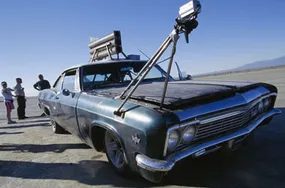
A collision occurs. Explode. A car destroyed for science. Funds seem to be unlimited. This is not true. It fits in your budget. They like things made cheaply. simply. It’s a challenge they enjoy.
You can get help there.
The presentation is based on an extensive network of experts. In the early days, things were difficult. now? Everyone wants to help. There were fans from all walks of life. Weapons Specialist. F.B.I. US Coast Guard. They all reached out for help. This is done in the name of science. to a large extent.
Find more science and urban legend content
If you want to stop mixing ballistic gels and start reading, there are many other ways to dig deeper. The program’s popularity has opened doors to resources that might otherwise have been closed to them.
For those interested in the mechanisms behind the mayhem, there are plenty of links online. Follow the physics of crash tests. Or learn how rocket engines really work. There are guidelines for force, power, torque and energy. A very basic concept. But the most important thing is.
Want to know if you can stop time? Or what would happen if you dropped a penny off the Empire State Building? These are all questions that the show addresses. The answer is there.
The discovery channel acts as a center. The official MythBusters fansite is another. Technical information is available at Physics.org and Scienceonline.org. There is also an interview with Adam Savage in 2005. There is also an article about Kari Byron.
Everything is connected. mythology. Science. people.
Source and additional information
The information collected in these sections comes from various interviews and articles. The main sources of information are:
- “Adam Savage Interview” Stephen interviewed on Thesneeze.com (23 Aug 2005).
- “Mythbusters’ Jamie Hyneman and Adam Savage” Genevieve Kosky was interviewed by The A.V. Club (9 April 2008).
- “Mythbusters Answer Your Questions,” by Stephen J. Dubner in The New York Times (October 25, 2007).
- Joe-mammy.com and poopreport.com have multiple archives covering specific episodes and casts.
These sources provide background on choosing myths and conducting experiments. It’s not just about explosions. It’s all about preparation. budget. Help.
What about the next myth? It is already under investigation.