We love our fruit. We mix them into yogurt, smoothies or eat a handful. But if you’ve ever called a strawberry or raspberry a “berry,” the vernacular has lied to you. In the strict, unforgiving world of botany, these red pearls are tricksters.
A true berry is a very special type of simple fleshy fruit. It is produced from a single flower with a single ovary. That’s the starting point. There are usually a lot of seeds inside. Meat is continuous. The middle and inner layers of the fruit wall are not separated by clear boundaries.
Think of foods that you instinctively classify as berries.
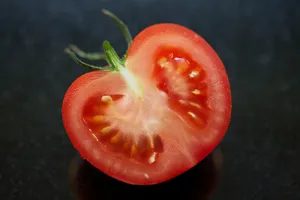
Grapes are berries. Bananas are berries. Even tomatoes count. This also applies to melons and oranges. If you look closely at the anatomy, you will see that they fit the definition. The wall of the fruit is fleshy throughout, without the hard pit that separates the pulp from the seed, as in the case of the stone fruit.
This classification places the berries in the groups of other large succulent fruits. Drupes is a group. Cherries, mangoes and olives belong here. You have a hard pit. Pomes are another are another. Apples, pears, and loquats fall into this camp. They have a central core that contains the seeds.
Then there are the aggregate fruits. This is where the confusion begins.
Raspberries and blackberries are not individual fruits. They are clusters of tiny drupelets. Each little nodule on a raspberry is a miniature fruit with its own seed. Strawberries are even stranger. The red part is the swollen tissue, not the ovary. The “seeds” on the outside are the actual fruit.
In botany, a berry is defined by the fact that it comes from a single ovary, not by its size or appearance.
Which small fruits are actually berries?
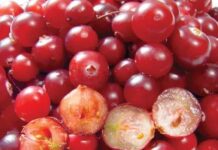
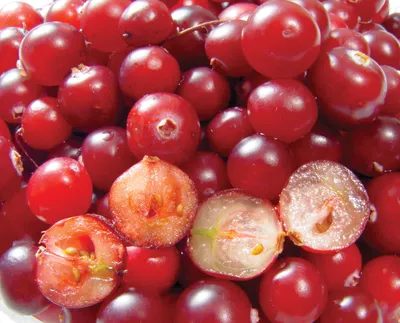
Cranberries are real berries. Blueberries are real berries. Grapes are real berries. The key is in the structure. If the entire fruit develops from the ovary and has fleshy walls throughout, it is likely a botanical berry. Size doesn’t matter. Bananas are technically berries. Watermelons are berries.
This difference is important because it shows how plants develop differently. Some develop a hard shell to protect the seeds. Others rely on fleshy sweetness to attract animals. A simple berry is a clever design. Soft, edible and full of seeds that can be ready to be dispersed.
The next time you see a strawberry, remember that it’s not a berry. It is a trick of light and evolution. A clever aggregate. But when you pick up a grape? You are holding a true berry in your hand. Simply. One ovary. No tricks.
私たちはベリーを、茂みから食べられる小さくて柔らかくて甘いものだと考える傾向があります。 この定義は間違っています。 これは生物学上の誤解であり、何世代にもわたって人々を騙してきました。 植物学では、果実は非常に特殊な構造をしています。つまり、花の単一の子房から生成される多肉質の果実です。 この厳密な定義によれば、スイカはベリーです。 バナナも同様です。 地味なトマトでも適格です。
しかし、すべての肉厚な果物が標準的な箱にきちんと収まるわけではありません。 それぞれの分類カテゴリに分類される 2 つの特定の外れ値があります。 ベリーのように見えます。 ベリーのような味がします。 しかし、構造的にはどうでしょうか? それらはまったく別のものです。
The Citrus Puzzle: What Is a Hesperidium?
Start with orange. Or a lemon. Or grapefruit. They all belong to the citrus genus. Biologically, they are classified as a hesperidium.
Why is this important? Because the skin tells the story.
Common berries have a thin skin and are edible. A hesperidium does not. It has a thick leather outer rind. This skin is called “flavedo” (colored outer layer) and “albedo” (white pith underneath). The fruit is internally divided into parts, each of which contains a juice vesicles. The hard exterior is more than just protective armor. This is the defining structural characteristic that separates citrus fruits from true berries.
If you’re wondering how to tell which fruits are hesperidiums, look for a thick, peelable peel. Citrus fruits are a good choice if you need a knife or special peeler. Texture is key. It’s not soft. It’s tough. It protects the delicate inner mass from drying out and pests.
Pumpkin Family: Understanding the Pepo
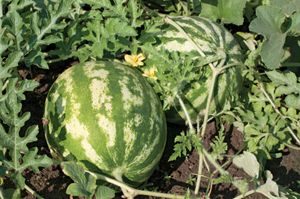
Next is the Cucurbitaceae family. This includes watermelons, cucumbers, pumpkins and squash. These fruits are called pepos.
Like the orange fruit, pepo is an improved version of the berry. However, citrus fruits rely on hard peels, while pevos rely on hard, thick peels. The exocarp (rind) is usually hard and waxy. The mesocarp (middle layer) can be fleshy or hard. The endocarp (inner layer) is usually fleshy and full of seeds.
This distinction is important for understanding the evolution of these plants. A pepo is designed for durability. Watermelons grow in a hot, dry environment. They need to retain water. They need to survive being rolled around by animals or dropped. The hard rind is an adaptation. It is not a soft and fragile fruit. It’s a survival mechanism disguised as a snack.
Why the Distinction Matters
您可能会问为什么我们需要为这些水果单独命名。 这似乎是语义上的挑剔。 但分类学与标签无关。 这是关于关系的。
The hesperidium and the pepo reveal不同植物科如何解决同一问题:如何在传播种子的同时保护种子。 柑橘类植物长出了厚厚的芳香果皮来吸引特定的动物并抵抗真菌。 葫芦科植物发育出坚硬的外壳以防止磨损和干燥。
从技术上讲,两者都是浆果