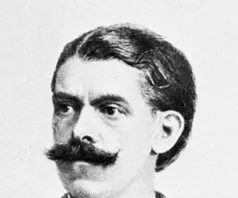
Kai Manne Börje Siegbahn doesn’t just learn about light. He learned to read the chemical fingerprints that are left when light hits objects. The Swedish physicist died in Ängelholm in 2007, but his legacy is rooted in the tools scientists use to analyze everything from polluted air to the surfaces of industrial catalysts.
He doesn’t start from scratch. His father, Karl Manne Siegbahn, won the Nobel Prize in Physics in 1924 for the discovery of the X-ray spectroscopy. Kai followed in his footsteps and earned a Ph.D. He received his doctorate from the University of Stockholm in 1944. In 1951 he became a professor at the Royal Institute of Technology. In 1954 he moved to Uppsala University, where he retired in 1984.
In 1981, he shared the Nobel Prize with Nicolaas Bloembergen and Arthur Leonard Schawlow. The committee cited their revolutionary achievements in spectroscopy. Their research focuses especially on the interaction of electromagnetic radiation with matter.
The science behind ESCA
Siegbahn’s special contribution was the development of ESCA. This stands for electron spectroscopy for chemical analysis. Sounds very technical. It is. But the logic is simple.
This technology is based on the photoelectric effect. When electromagnetic radiation hits matter, electrons are released. These emitted electrons carry a certain amount of kinetic energy. Siegbahn’s breakthrough was to improve the equipment so that it could measure its kinetic energy very precisely.
Why is this important?
This is because the binding energy can be calculated by measuring the kinetic energy. Each chemical element keeps its electrons in a characteristic energy level. These energy levels vary slightly depending on which molecule or ion the atom belongs to. By measuring the displacement, we can determine not only the elements present, but also their chemical environment.
Siegbahn showed that chemical elements combine electrons with specific energies that vary slightly depending on the molecular or ionic environment.
This precision turns a physical phenomenon into a chemical diagnostic tool.
Practical application
In the 1970s, ESCA was introduced around the world. This is not just an academic curiosity. Industry needs to understand materials on a surface level.
Consider oil refining. The solid catalysts used in this process work based on surface interactions. ESCA allows engineers to analyze these surfaces directly. This helps us understand how reactions happen at the atomic level, allowing for more efficient refining processes.
Pollution control provides another important application. Analyzing the particles in polluted air requires a precise understanding of the composition of these particles. This information was provided by ESCA. This reveals the chemical composition of air pollutants and helps scientists trace their sources and effects.
Siegbahn didn’t just come up with a theory. He established this method. He improved the instrument. He turned the physics of electron emission into a practical method for interpreting the composition of the world around us. This technique is still the cornerstone of materials science. Answers surface chemistry questions that cannot be answered with bulk analysis. What other hidden layers are waiting to be measured with such tools? The surface is just the beginning.