Victor Hugo once wrote: “It is sad to think that nature speaks and people do not listen.” In this issue of Bêtes de Science, we listen. The focus? Animal intelligence. But before we can get into the mind of the beast, we must first see its face.
Consider the Chartreux and Russian blue. Both belong to the “blue” cat breed club. They have a short, uniform coat. The similarities end there. If you think they are interchangeable, you are wrong. They are different entities with different histories and different physical characteristics.
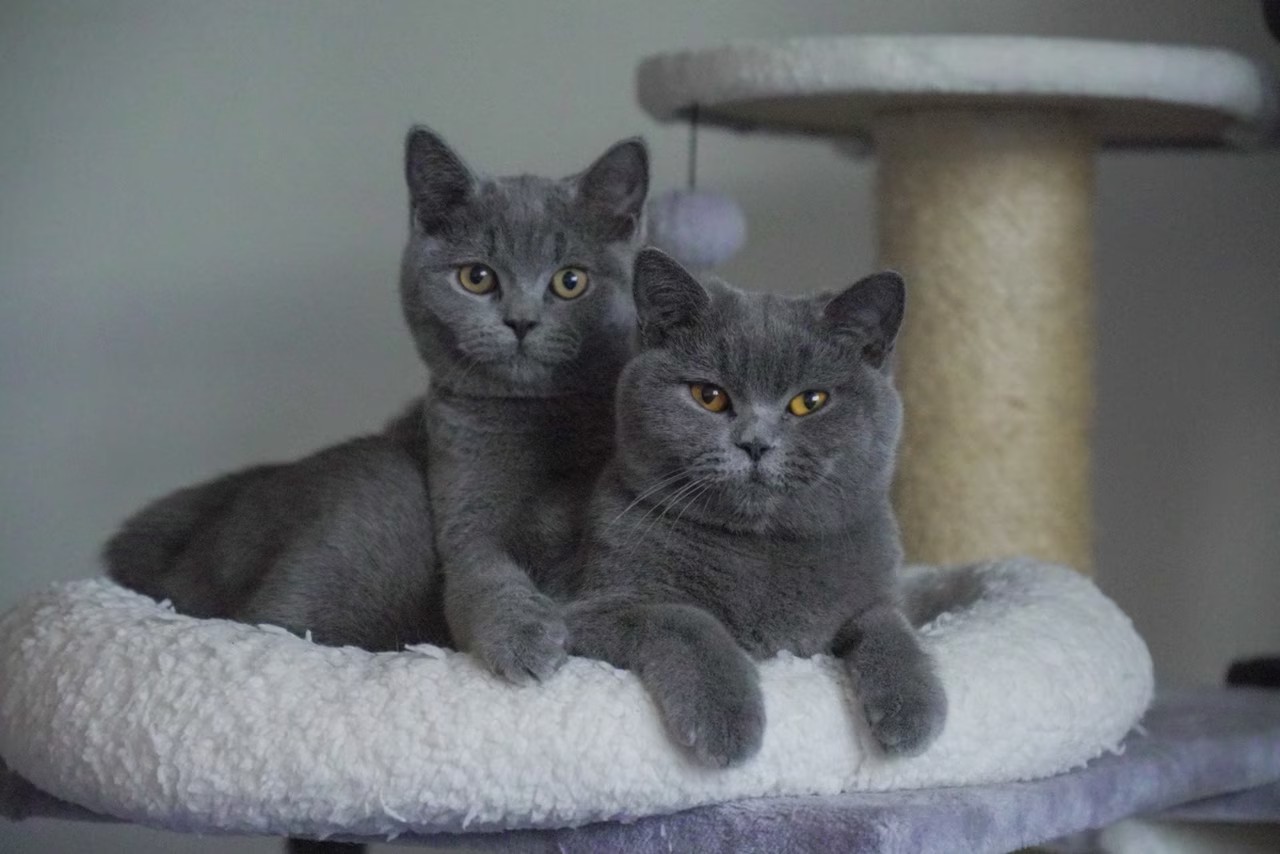
Chartreux is designed for power. It’s a strong cat. The bone structure is heavy. The muscle tissue is well developed. Imagine a tank wrapped in velvet. The head is very wide. Cheeks are round. This gives the cat a soft, sweet look. It is deceptive. The large, round eyes vary in color from golden yellow to copper orange. The coat is dense. It has a slightly woolly texture. The blue-gray color appears darker and deeper than its rival’s.
Next, let’s look at Russian blue. The silhouette changes. The body is elongated. More refined. There’s not much here. Just grace. The legs are slender. The head is triangular in shape with angular features. It looks very light. Agile. Ready to pounce or flee with equal ease. The jackets are the same shade of blue-grey, but different. Gives typical silver. The eyes are the giveaway. They are large. They are spaced wide apart. And they are a vivid emerald green.
The difference between the two varieties is not only in appearance, but also in structural integrity and visual signals.
Why is this important? Because understanding the body tells us something about our mind. The Chartreux looks solid. Grounded. Russian Blue looks aerodynamic. Alert. One is a companion built for stability. The other is a hunter built for precision.
This is just the beginning. We’ve just scratched the surface of how these cats behave. The next step is to study how they interact with their environment. How they solve problems. How they communicate.
stay tuned.
Calm. Intelligent. Affectionate. Both varieties are known for their sweetness, but deeper down the similarities disappear. The real difference is in their needs. One thrives in low-maintenance companionship. The other requires mental effort to stay out of trouble.
Personality profiles that dictate lifestyle
Chartreux Sociable and balanced personality. Relatively independent. This cat loves to spend time with his family and play. Wants to be held but refuses to be invasive. The most important thing is that it handles loneliness well. It is easy to adapt. Whether you live in a small apartment or a house with a garden, Chartreux is perfect for you. They live peacefully with their children.
The Chartreux are easy-going roommates in the cat world.
Russian Blue is different. It is reserved. High sensitivity. They are deeply attached to their owners. Prolonged loneliness is painful for this breed. Strangers raise suspicions. The intelligence here is extraordinary. This brain power needs regular stimulation. Without it, things quickly get boring. The result is mischief. If left unchecked, curiosity can turn into destructive behavior.
Health, longevity and cost factors
Both varieties are generally durable, but have certain weaknesses. Chartreux faces potential issues with the heart, kidney and joint problems. The average lifespan is 13-15 years.
Russian Blue often enjoys better longevity. It can last up to 20 years. General health is strong. Occasional anemia is a known risk.
The two vary greatly in price and rarity. The Chartreux is more common in many regions. Although not extinct, Russian Blues often command high prices due to their special breeding requirements and low availability in certain markets.
Which cat suits your home?
If you work long hours, Chartreux is the safer bet. Tolerates loneliness well. It fits easily in tight spaces.
Russian Blue offers deeper bonding if you take the time to interact. However, be prepared for an mental load. Activities must be organized. Boredom must be prevented.
Both are beautiful choices. Both are very intelligent. However, one is a companion who walks beside you. The other person is a partner who expects you to keep up.
Chartreux vs Russian Blue: Budget and Rarity
Let’s talk about money. If you are ready to take your Chartreux home, you will pay between 400 and 1,000 euros. This range is highly dependent on breeder and pedigree. For a cat that looks like a fluffy gray stone, this is an important investment.
Russian blue is slightly cheaper. Usually the price is 500-700 euros. Why the difference? Supply and demand. Or rather, there is a shortage of supply.
The Russian blue cat is still a very rare breed in France. The numbers don’t lie. In 2023, the Livre Officiel de la Feline (LOOF) recorded 1,546 Chartreux. By comparison, there are only 173 Russian blues.
This is not a typo. That’s only a fraction of the population of Chartreux.
This rarity explains why Russian Blue is little known in mainland France. It’s not because people don’t want them. Because it’s hard to find. This breed is far behind popular giant cats like the Maine Coon. In the same year, the number of registrations of this variety exceeded 19,000.
The contrast is clear. One of these varieties is well known in France. The other is a ghost.
Why scarcity is important for wallets
When we look at the price of Russian Blue, we see a market shaped by extreme exclusivity. Low enrollment means fewer kittens are available each year. This increases the price, although the variety is generally cheaper than its Chartreux cousin.
But is it worth lowering the price if you can’t find a breeder?
Many potential owners wonder where in France they can buy Russian blue. Rarity means you can’t just go to your local pet store or Google and call the original breeder. You have to wait. You have to network. You may have to wait months or even years before getting a kitten.
In comparison, The Chartreux is easier to get to. Around 1,500 new kittens are registered every year, so there is even more to choose from. You can usually find a breeder near your home. Higher possible costs (up to EUR 1,000) may lead to better availability.
Maine Coon effect
Why is this comparison important? Because the Maine Coon cat shows what happens when the breed becomes popular. More than 19,000 registrations means there are many breeders. Competition between breeders can drive down prices. Supply easily meets demand.
Russian Blue was trapped in the opposite corner. Poor visibility. Those who know this breed are in high demand. The supply is low.
This creates a unique dynamic for buyers. You end up buying a cat. You buy entry into a small exclusive club. The price is reasonable compared to Chartreux ceiling, but it requires more effort.
The Chartreux is your trusted neighbor. Russian Blue is a mysterious guest that rarely appears.
Which one do you prefer? You will get it next month. Or what will we get in two years?