


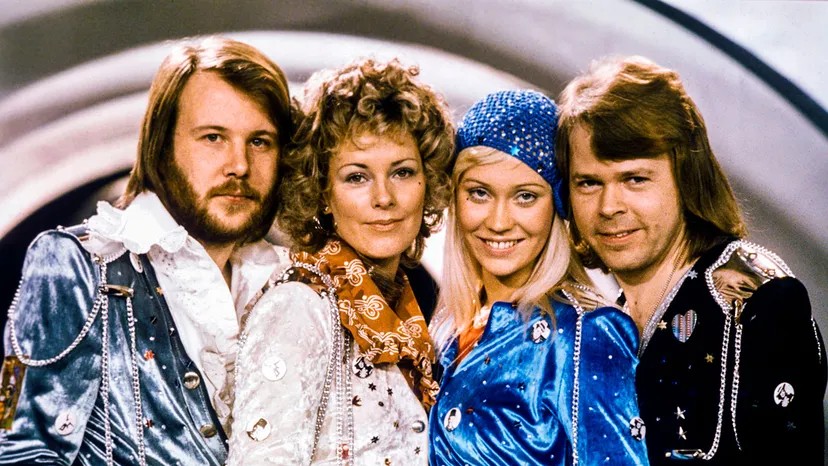
ABBA changed pop music forever. Formed in Stockholm in 1972, the quartet of Agnetha Fältskog, Björn Ulvaeus, Benny Andersson, and Anni-Frid Lyngstad became one of the most successful groups in history. But how much do you really know about the Swedish supergroup?
Test your knowledge. Start here.
Who Wasn’t Born in Sweden?
One of the four wasn’t Swedish. It was Frida.
Born in Bjørkåsen, Norway, in 1945, Frida Lyngstad is the daughter of an occupying German soldier. She and her mother moved to Sweden when she was young. They did this to escape discrimination against children born from liaisons with “the enemy.”
Agnetha, Björn, and Benny are Swedish. Frida is Norwegian.
The Eurovision Break
ABBA won the 1974 Eurovision Song Contest. That was their big break.
Who else found success at Eurovision? Celine Dion.
The French-Canadian singer won for Switzerland in 1988. That win launched her international career. A Flock of Seagulls didn’t compete. Neither did the Spice Girls in their early days.
Crazy Costumes Were a Tax Strategy
ABBA was known for outrageous stage costumes. Why?
To avoid the tax man.
Swedish tax laws at the time allowed stage costumes to be tax-deductible. The catch? They couldn’t be considered street wear. Nobody could have been as badly dressed on stage as they were, Björn said in ABBA: The Official Photo Book. It wasn’t about walking on the wild side or copying Funkadelic. It was about saving money.
The Original Meaning of “Fernando”
What was the original version of “Fernando” about?
A love affair gone wrong.
Frida released the song before ABBA became a group. The original lyrics featured a friend consoling Fernando, who had lost his love. The revised lyrics tell the story of two freedom fighters from the war between Mexico and Texas, according to Björn. It wasn’t about the Spanish Civil War. It wasn’t about an Italian soccer player.
ABBA’s Greatest Hits: The Red Vinyl Myth
What was significant about the 1975 release ABBA’s Greatest Hits?
Most of the songs had not been hits yet.
Only half the tunes on the disc had charted somewhere in the world. But the addition of “Fernando” changed everything. The album went multiplatinum around the globe. The original records were not red vinyl. The cover image was not banned.
“The Winner Takes It All” and Divorce
What is the 1980 song “The Winner Takes It All” allegedly about?
The divorce between Björn and Agnetha.
They deny this. It is widely believed otherwise. The lyrics were written by Björn. Agnetha sang the vocals. They got divorced around that time. You can understand the skepticism. Frida and Benny divorced in 1981. The song is not about a night of excessive gambling. It is not about an early failed romance of Frida’s.
The Director Who Made Films
The director of their music videos later became famous for his movies. Which film did he direct?
What’s Eating Gilbert Grape.
Lasse Hallström directed many ABBA videos and their feature-length film ABBA: The Movie. He went on to greater fame. He directed What’s Eating Gilbert Grape and Cider House Rules. He did not direct Sleepless in Seattle or Babette’s Feast.
Their Biggest Hit
What was ABBA’s biggest hit?
“Dancing Queen”.
This one should be easy. “Dancing Queen” went to No. 1 in more than 12 countries. It was ABBA’s only No. 1 hit in the U.S. Its first live performance was at a pre-wedding gala for King Carl XVI Gustaf and Queen Silvia of Sweden. Queen Silvia could likely identify with the tune. It wasn’t “Take a Chance on Me” or “Mamma Mia.”
Movies Before “Mamma Mia”
Before Mamma Mia, which movie prominently featured ABBA tunes?
Muriel’s Wedding.
This 1994 Australian movie featured an awkward girl. She was obsessed with weddings and ABBA’s music. My Best Friend’s Wedding and My Big Fat Swedish Wedding came later or featured different soundtracks.
The Jukebox Musical Trend
The stage version of Mamma Mia is credited with sparking which Broadway trend?
The jukebox musical.
Jukebox musicals, where all the music in the show is from one popular group or singer, had existed before Mamma Mia. But this play made the trend explode. It wasn’t about puppets discussing mature themes. It wasn’t about super-expensive theatre tickets.
Did you get them all? The legacy of ABBA continues to resonate. Their influence extends far beyond just their songs. It’s in the way we consume musical theater today. And maybe in how we view tax deductions. Or perhaps just in the enduring mystery of who really wrote “The Winner Takes It All.”


